chinabuy QC Photo Reshoot Decision Guide
chinabuy QC Photo Reshoot Decision Guide
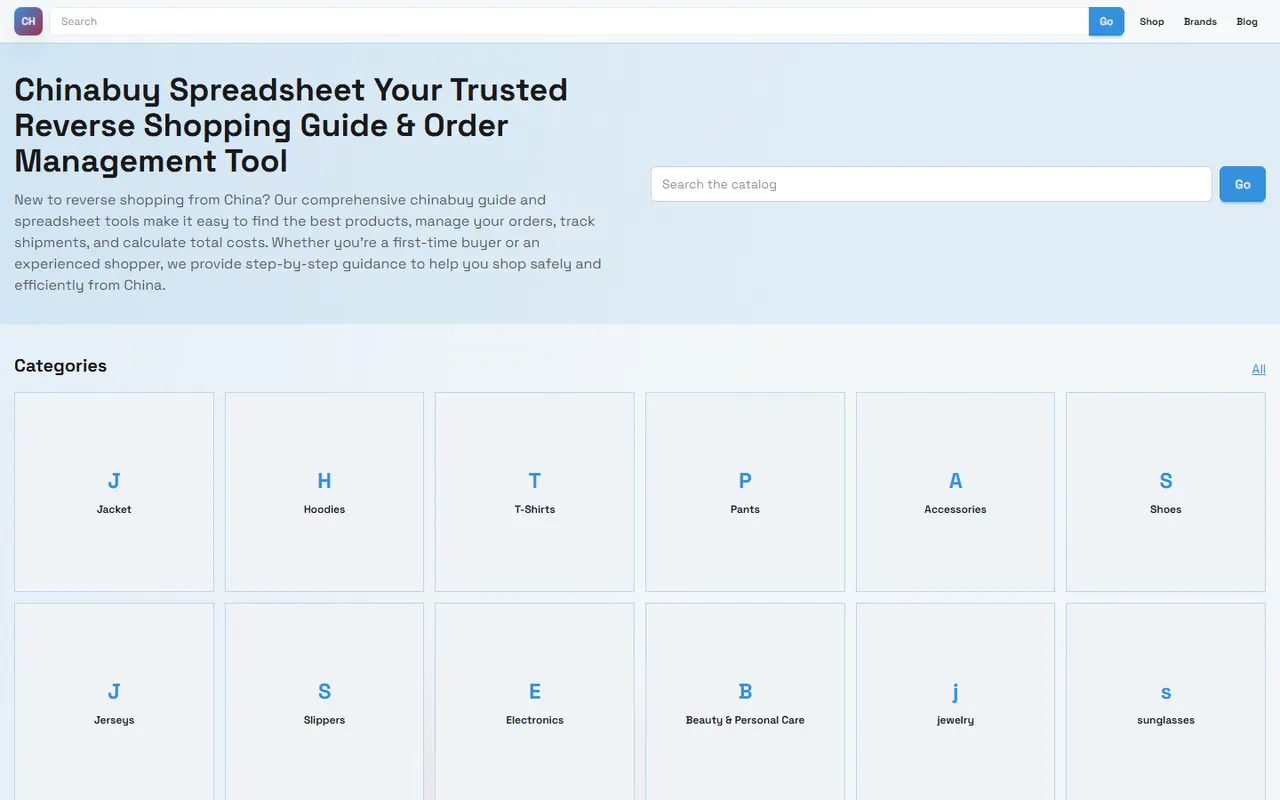
Caption: Use a centralized spreadsheet view to decide whether chinabuy warehouse QC photos are sufficient to support shipping, reshooting, or holding decisions.
First Define the Reshoot Decision We're Making
In the chinabuy purchasing process, the purpose of QC photos is not to prove that an item is perfect, but to help buyers make a specific decision at the warehouse stage: can this item proceed to consolidation and international shipping now, or should I first request a reshoot, exchange, return, or hold?
This article addresses one question only: when you have received warehouse QC photos, how do you judge whether the existing photos are sufficient, and choose between a website-based spreadsheet and Google Sheets for record-keeping. It applies to clothing, shoes, bags, small accessories, and similar items that require checking appearance, size, color, tags, or obvious defects; it does not apply to items requiring authenticity verification, chemical safety, electronic performance, load-bearing tests, or professional inspection reports.
Verification date: September 14, 2026. This article does not use real-time prices, inventory, route quotes, or specific order status as the basis for conclusions; actual reshoot costs, warehouse processing times, return/exchange windows, and international shipping restrictions should be confirmed by buyers through the china-buy.net pages, order center, and customer service responses before submitting requests.
Before starting the judgment, write the question as an actionable sentence:
Can I confirm the item's style, color, quantity, and visible defects from the existing QC photos?
Can I confirm the most usage-impacting dimensions or specifications?
If I don't reshoot today, what is the most likely regret after shipping?
Can a reshoot truly reduce this risk, or will it only yield more similar angles? 🙂
If you cannot answer these questions, don't rush to ship. The core value of the QC stage is to handle visible issues as early as possible before international transport.
Advantages and Limitations of Centralized QC Photo Viewing in chinabuy's Website-based Spreadsheet
The advantage of a website-based spreadsheet is centralization. Buyers can place multiple items, order numbers, warehouse status, QC photo links, and notes in a single view, making it easy to quickly scan a batch of items: which ones have photos, which are missing key angles, and which need to contact the warehouse.
This method is especially suitable for these scenarios:
Multiple items in a batch, needing to decide which to consolidate and which to hold.
Same model in different colors or sizes, requiring horizontal comparison of photo completeness.
Wanting to keep warehouse photos, product titles, seller notes, and decision status in one place.
Needing to prepare a concise reshoot list for colleagues or customer service.
Its limitations are also clear. A centralized view can easily lead people to mistakenly think that "having photos" equals "photos are sufficient." In reality, whether QC photos are sufficient does not depend on quantity, but on whether they cover the evidence needed for decision-making. Three duplicate front views may be less useful than one clear size label or sole photo.
When using a website-based spreadsheet, it's recommended to keep at least these fields for each item: item identification, QC photo count, whether key angles are complete, anomalies, current decision, and reshoot request text. This turns it from a simple photo directory into an actionable warehouse decision panel. 📋
How to Record Photo Links, Gaps, and Notes in Google Sheets
Google Sheets is better for collaborative recording and review. It may not be as convenient for viewing photos as a website-based spreadsheet, but it is more flexible for multi-person annotations, filtering, batch copying reshoot requests, and retaining historical decisions.
A practical Google Sheets structure can be arranged like this:
Field | What to Record | Why It Matters |
|---|---|---|
Item name or internal ID | Shortest name that distinguishes each item | Avoid sending reshoot requests to the wrong item |
QC photo link | Location of warehouse photo or screenshot | Convenient for re-checking |
Confirmed info | Style, color, quantity, obvious defects, etc. | Record the parts already judged |
Missing evidence | Size tag, sole, back, details, packaging, etc. | Determine if reshoot is needed |
Risk level | Low, medium, high | Help sort processing order |
Next step | Ship, reshoot, return/exchange, hold | Turn the sheet into an action list |
The value of Google Sheets is not cramming all photos into cells, but in writing clearly "why a reshoot is needed." For example, instead of just writing "more photos," write "Need reshoot of inner size label and sole pattern; existing photos cannot confirm whether size matches order." Such notes reduce back-and-forth with customer service and help you understand your reasoning days later. ✅
If there are many orders, use filter views to sort by risk level: handle high-value, high-return-risk, or near-return-window items first; low-risk small items can be left for later, avoiding time wasted on unimportant angles.
Compare Viewing Paths for Photo Completeness, Specification Evidence, and Anomaly Marking
To judge whether QC photos are sufficient, it is recommended to look at three levels rather than relying on first impressions.
Level 1 is photo completeness. At minimum, you should clearly see the front, back, key details, and overall condition. For shoes, usually required are the shoe tag, sole, box or size marking; for clothing, common focal points are neck label, care label, size label, pattern placement, stitching, and obvious color differences; for bags, check hardware, zippers, straps, corners, and internal structure.
Level 2 is specification evidence. Specifications cannot be passed just because they "look about right." Size, color, quantity, set components, left/right shoes, and included accessories are all things to confirm before shipping. If the product page describes a set, but QC photos show only a single piece, you should reshoot or confirm before consolidating.
Level 3 is anomaly marking. Anomalies include stains, damage, loose threads, creases, misaligned prints, scratches on hardware, severely crushed packaging, obvious color mismatch, left-right inconsistency, etc. Note that QC photos can help identify visible anomalies, but cannot guarantee material feel, durability, waterproofing, odor, safety certifications, or long-term performance.
A reliable viewing path is: first check if the item matches the listing, then check size and quantity, then look for visible flaws, and finally judge whether a reshoot would change the decision. If a reshoot only provides a "better-looking angle" but does not affect shipping, return, or hold decisions, it is usually not worth the added wait time.
Use a Table to Distinguish Direct Judgment, Reshoot Needed, and Hold Orders
QC decisions can be divided into three categories: direct judgment, reshoot needed, and hold order or hold shipment. The key is not to pursue zero risk, but to know where your accepted risk comes from.
Decision | Typical Situation | Recommended Action |
|---|---|---|
Direct judgment | Style, color, quantity, key size, and obvious appearance are all identifiable, with no visible anomalies affecting use | Mark as ready to consolidate, continue checking route, volumetric weight, and declaration info |
Reshoot needed | Missing size label, detail angles, accessory photos, close-ups of anomalies, or order critical info | Specify the exact parts to reshoot and the purpose of the judgment |
Hold order or hold shipment | Photos clearly inconsistent with order, suspected severe defects, missing set pieces, unclear seller info, or tight return window | Contact platform or seller first to confirm, then decide on return/exchange or keep |
Reshoot requests should be specific; ideally, one request addresses one judgment point. For example:
Please reshoot the collar label and care label to confirm size matches order.
Please reshoot the sole and inner size label; existing photos cannot confirm left/right and size.
Please reshoot close-ups of the bag's four corners and zipper hardware; existing photos cannot clearly show scratch locations.
Please lay out all accessories and reshoot to confirm the set quantity is complete. 🔍
If an item is missing a lot of information, first decide if it's worth further processing time. Low-price, non-critical, low-risk items may not require repeated reshooting; high-value, size-sensitive, hard-to-return, or gift items are more worth confirming at the warehouse stage.
Explain What QC Photos Cannot Prove About Quality, Safety, and Delivery Issues
QC photos are often overestimated. They help buyers see the appearance at the time the warehouse took the photos, but cannot replace professional testing and cannot guarantee the final condition after shipping.
QC photos typically cannot prove these matters:
Whether the material exactly matches the seller's description.
Durability of shoes and clothing after long-term wear.
Whether electronic product functions are stable.
Whether cosmetics, food, children's products, or safety-related items comply with destination country regulations.
Whether the item will be squeezed, dampened, damaged, or inspected by customs during international transport.
Whether the item is authentic or has brand authorization.
For brand risks, import restrictions, taxes, and customs documentation, buyers should declare truthfully according to destination country requirements and confirm restrictions themselves. Do not use reshooting to replace compliance judgment, and do not ask the platform to provide methods for under-declaring value, splitting orders to avoid taxes, or evading inspections.
Consolidation also requires caution. Putting multiple items into one package may reduce repeated first weight or handling costs, but may also increase volumetric weight, package value, and single-loss risk. Splitting packages may increase fixed costs but can sometimes resolve route restrictions or reduce one-time risk. The final choice should be based on actual item quantity, volume, weight, value, destination country rules, and available routes, not just on which method appears cheaper on the surface. 📦
Final Action: Generate a Reshoot Request List and a Candidate Retention List
After completing QC judgments, don't just keep conclusions in your head. It is recommended to output two lists: a reshoot request list and a candidate retention list.
The reshoot request list includes only items requiring platform or warehouse action. Each entry should contain the item number, current issue, parts to reshoot, and what to determine after the reshoot. This makes requests easier to execute and verify.
The candidate retention list includes items that are currently acceptable but still have minor risks. Examples include slight packaging creases, small loose threads in non-critical areas, or possible color differences under lighting. Recording these risks helps you stay aware during consolidation, shipping insurance, and inspection upon receipt.
Finally, you can proceed in the following order:
Divide all items into three categories: ready to consolidate, needs reshoot, and hold.
For items needing reshoot, specify exact angles; avoid vague requests.
For hold items, first check return windows, seller explanations, and platform handling channels.
For ready-to-consolidate items, continue checking route restrictions, volumetric weight, declaration documents, and destination country taxes.
Save the current spreadsheet version to avoid forgetting the original judgment basis after reshooting.
This method does not save a fixed amount of money, but reduces the probability of incorrect shipping, repeated communication, and ineffective waiting. It is most suitable for buyers handling multiple items at once, sensitive to size or details, and needing to clearly express reshoot needs to customer service; it is not recommended for authenticity verification, high-risk imported goods, safety-related items requiring professional testing, or any purchase decision that cannot be responsibly judged based solely on photos. 🙂
Browse our latest products and find your next favorite item.