How to Check Wet-Grip on chinabuy Sneakers
How to Check Wet-Grip on chinabuy Sneakers
How to Check Wet-Grip on chinabuy Sneakers
This guide solves a specific problem: you're about to look for sneakers on china-buy.net, but your main use cases include rainy commutes, slippery tiled floors, playgrounds, or outdoor training. You want to judge before buying whether the soles provide reasonably good drainage and wear-resistance clues.
After reading, you should be able to do three things: record the outsole information that the product page can prove, mark the parts that can only be verified by physical inspection or actual use, and decide whether to continue checking size, after-sales, and shipping conditions based on your usage frequency.
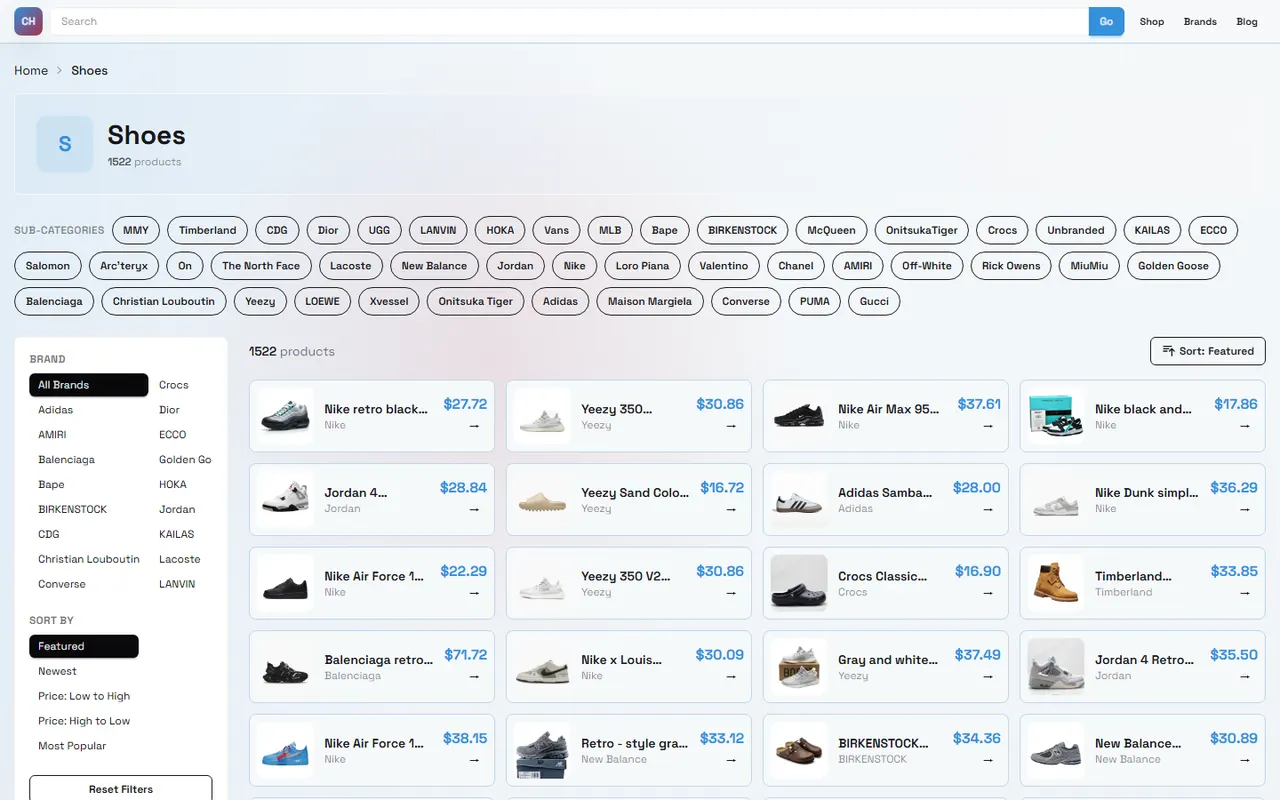
The sample verification date for this page is October 1, 2026. The shoe catalog pages on china-buy.net show a Shoes category and multiple brand and style filters, but the catalog images and text cannot directly prove wet-surface friction, rubber compound, or real wear life. ⚠️
First Clarify the Surface Tasks for Wet Walking or Training
Don't treat "good grip" as a vague selling point. Wet grip should at least be broken down into three variables: surface, movement, and usage frequency.
If it's mainly urban rainy commutes, the focus is usually wet brick surfaces, metal manhole covers, underpasses, and ordinary asphalt. If used for training, you also need to consider sudden stops, direction changes, forefoot push-off, and heel landing. Different outsole treads may suit different surfaces, so you can't judge solely by the shoe model name.
Before buying, write down the following tasks:
Primary surface: wet asphalt, tiles, rubber track, dirt, or mixed surfaces.
Primary movement: normal walking, jogging, short-distance training, sudden stops, or frequent turns.
Usage frequency: 1-2 times per week, 3-5 times per week, or almost daily.
Acceptable risk: whether you can accept slowing down in the rain or preparing another pair more suitable for wet conditions.
Also state the non-applicable situations clearly: if you need professional sports-team-level wet test data, or need to confirm that a certain shoe meets a specific safety standard, just looking at catalog images is not enough. You should seek brand technical documents, lab data, or physical test records.
Set the Evidence Boundary for Product Page Specs and Images
In the china-buy.net catalog, shoe pages can be used to discover basic information such as styles, categories, brand filters, and product names. The currently visible sample includes brand or style tags like Nike, Adidas, Jordan, Yeezy, New Balance, Salomon, and HOKA, and also shows some product prices. But these fields cannot automatically infer sole material, wet performance, inventory stability, or brand authorization status.
Before buying, evidence should be divided into three layers:
Information explicitly written on the product page, such as upper material, outsole material, size range, color, and seller description.
Information observable from the main product image or detail images, such as whether the tread is continuous, whether the forefoot has large rubber coverage, and whether there are obvious wear areas on the heel.
Information that cannot be proven by the product page, such as wet friction coefficient, stopping distance in rain, rubber hardness, actual durability in months, and performance at different temperatures.
Images are only suitable for helping you ask questions, not for replacing tests. Don't write dark treads, exaggerated shapes, or the "sneakers" category directly as non-slip, wear-resistant, or suitable for rainy days.
Check Outsole Tread Depth, Spacing, and Drainage Direction
After opening a specific product page, prioritize looking for side views of the outsole, bottom views, and forefoot and heel detail images. If you can only see the upper, outsole grip verification should be marked as "insufficient evidence."
When observing, record in the following order:
Whether the tread covers the forefoot, arch area, and heel, not just concentrated in parts.
Whether the grooves have a clear drainage direction, or form closed large blocks that easily accumulate water.
Whether the tread spacing is sufficient to let mud and water drain. Overly dense shallow treads may get filled with mud and sand easily, and overly large block gaps may also reduce continuous contact area.
Whether there are transverse or diagonal flex grooves at the forefoot flexion point to accommodate normal push-off and foot bending.
Whether the heel has segmented tread to help distinguish landing, rolling, and push-off phases.
Don't just count the number of tread lines. It's more useful to record tread distribution, groove continuity, and whether there are large blank areas in key contact zones. Without a scale reference, don't convert visual depth in images into millimeters.
Check Rubber Coverage on Forefoot, Heel, and Flex Zones
The areas where functional differences most easily appear are usually not the center of the sole, but the forefoot, lateral heel, and the flex zone of the foot.
The forefoot is an important contact area for push-off and direction changes. If the lateral forefoot or the area corresponding to the big toe lacks wear-resistant coverage, frequent training may lead to faster smoothing. For the lateral heel, observe whether the landing position has independent rubber blocks and whether there are obvious gaps between them.
The flex zone needs to be checked for two things: whether the outsole tread allows natural bending, and whether the flex point has only soft foam or a thin layer of material. If the product image cannot distinguish this, it should be listed as an item requiring physical confirmation, not directly judged as durable or not durable.
You can use the following checklist to avoid being misled by upper colorways or brand names:
Check Area | Observable Clues on Product Page | What Still Cannot Be Proven | Pre-Purchase Action |
|---|---|---|---|
Forefoot | Tread coverage, groove direction, obvious rubber zones | Wet stopping ability, rubber hardness | Request clear bottom images, record evidence level |
Heel | Lateral wear zones, heel block segmentation | Lifespan after long-term landing | Increase wear risk level based on gait and usage frequency |
Flex Zone | Flex grooves, bottom continuity | Whether it delaminates or collapses after bending | Confirm sole structure and return conditions |
Arch Area | Large blank areas or continuous tread | Stability on specific surfaces | Do not treat appearance support structures as proof of non-slip |
Distinguish Visible Grip Clues from Performance That Cannot Be Proven by Images
Visible clues only help you filter, they are not performance conclusions. The following information can usually be initially observed from clear product images:
Whether the outsole is actually shown.
Whether the tread covers the main contact areas.
Whether the forefoot and heel have segmentation or independent rubber blocks.
Whether the sole shows obvious wear, missing parts, deformation, or image obstruction.
The following information cannot be confirmed by catalog images alone:
Wet friction coefficient.
Stopping distance on wet tile.
Drainage efficiency in muddy water.
Changes of rubber in low temperature, hot pavement, or after long-term flexing.
How long it really takes to wear smooth.
Therefore, if the product page has no explicit outsole description, the safest record is not "poor grip," but "cannot be confirmed from existing evidence." This distinction reduces the risk of mistaking visual impressions for test conclusions. 🔎
Build a Wear-Risk Checklist Based on Usage Frequency
The wear risk of the same shoe differs between low-frequency commuting and high-frequency training. It is recommended to evaluate usage frequency together with movement intensity.
Low-frequency commuting can focus on checking the lateral heel and contact with wet ground; medium-to-high frequency training should also check the forefoot inner and outer sides, lateral heel, and areas repeatedly stressed during turns. If you often train on rough asphalt, you can't just refer to whether the sole tread looks good; you should also pay attention to whether the rubber coverage is continuous and whether the seller provides clear structural information.
Before buying, you can use a simple grading:
Low risk: clear bottom images, complete coverage of main contact areas, low usage frequency, regular surfaces.
Medium risk: bottom images partially clear, but tread depth, rubber coverage, or seller description incomplete.
High risk: no outsole detail images, mainly used for wet sudden stops or high-frequency training, and cannot accept a short lifespan.
For high-risk situations, prioritize finding products with more complete evidence, rather than deciding based only on a lower displayed price. Prices, inventory, and product information in the catalog are time-sensitive, so re-check the specific page before submitting the order.
Check Size, Returns, and Product Information Before Purchase
Grip and wear resistance are only part of the purchase decision. If sneakers don't fit properly, foot sliding, toe jamming, or heel slipping can also affect walking stability.
Before submitting the order, check item by item:
Whether the product name, color, and size match the target style.
What unit the size chart uses, and whether foot length needs to be converted manually.
Whether the product page describes upper, outsole, or lining materials.
Whether the current page still opens normally and images and descriptions are complete.
Return window, applicable conditions, and who bears possible shipping costs.
Whether warehouse inspection is needed before deciding on consolidation or shipping.
The catalog pages on china-buy.net are suitable for finding and filtering products, but you cannot treat the catalog display directly as proof of completing the purchase, warehouse inspection, or actual receipt. If the page does not explicitly state a certain policy, you should confirm with the corresponding customer service or order process before ordering, and not fill in the blanks yourself.
Wet use also involves safety issues. No matter how much the product image looks like outdoor or training shoes, you should gradually try them on actual surfaces, first reduce speed, and avoid metal covers, oil stains, and potholes hidden by water. 🌧️
Final Action: Complete the Wet Grip and Durability Verification Form
Record each candidate product in the following order, and complete at least one round of screening before comparing prices:
Write down the actual surface, movement, and weekly usage frequency.
Save page information such as product name, size, materials, and outsole images, and record the verification date.
Mark whether the forefoot, heel, and flex zone have clear outsole evidence.
List items that cannot be proven by images separately as unconfirmed.
Re-check size, return conditions, inventory, and shipping-related information.
Only proceed to order and subsequent warehouse inspection when evidence is sufficient and risk is acceptable.
Finally, don't ask "Is this shoe absolutely non-slip?" but rather "Does the existing evidence sufficiently support my surface and usage frequency?"
In terms of saving money, reliable amounts cannot be calculated from upper images or catalog prices alone; what can be compared are the listed prices of candidate products, possible return costs, and the cost of early replacement due to insufficient wear resistance. Increased risks include unknown wet performance, return costs due to size mismatch, insufficient outsole details, and wear uncertainty under high-frequency use.
This verification is more suitable for buyers who need to screen multiple shoe models before ordering, are willing to record evidence, and can accept the risk of actual testing. It is not recommended as the sole basis for professional competitions, severely slippery environments, or scenarios requiring explicit non-slip certification.
Agent Platform Shopping FAQ
1. How do I find the product I want on china-buy.net?
You can search with a keyword or browse the category pages directly, where products are also organized by brand. Longer search terms usually return fewer but more precise results than short terms. For example, you can search "Air Force 1 White," "sneakers," or just "Air Force 1."
2. Why is it not recommended to use Google Sheets on china-buy.net?
Google Sheets is only suitable for tables with very few products. Once the number of products increases, loading becomes very slow and the system lags severely. This is especially true on mobile devices, the visual experience is poor, and finding products is extremely inconvenient. For the same set of products, the tables on china-buy.net load faster and have a better visual experience.
3. Which platform offers the best coupons on china-buy.net?
I recommend Kakobuy because it currently offers a $15 discount code with no minimum purchase requirement. This is great for users ordering small packages. The code is kakobuy888.
4. Are the spreadsheets on china-buy.net safe?
This site does not collect any personal information; it only serves as a product catalog for the agent platform. All transactions take place on the agent platform.
Browse our latest products and find your next favorite item.